
The saw, the press and the weld bay all have a queue.
Fabrication is a scheduling problem before it is anything else. The material is usually the easy part; what decides whether a job lands on time is which machine is free and who can weld it. Gydon models the work centres, the minutes and the setup, so a promise is made against capacity rather than against optimism.
Setup is where fabrication quotes go wrong
Setting a press or a jig takes what it takes whether you are making one or forty. Gydon charges setup to the job rather than spreading it across the units, so the same part does not appear to be worth different amounts on different orders purely because of batch size.
Each stage carries its own rate. Cutting, forming, welding and fitting are not the same money, and a costing that averages them tells you nothing about which operation is eating the margin.
- Standard minutes per unit and setup minutes per job, held to four decimal places
- Rates per work centre, so the weld bay prices differently from the saw
- Planned against actual per stage, collected at the bench rather than estimated
- Exact decimal arithmetic throughout, because a penny of drift on a long job compounds
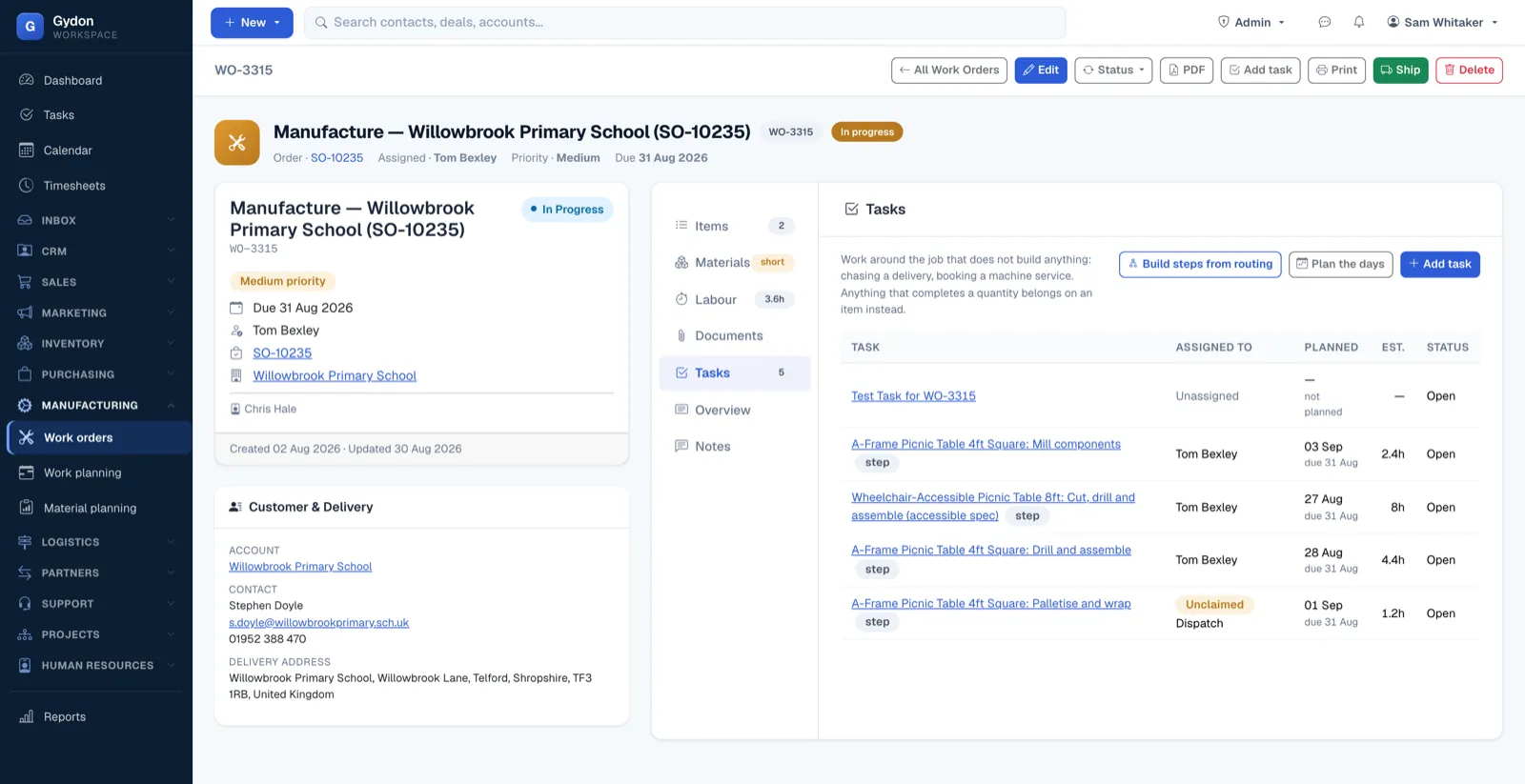
The routing, become real steps against a live job.
Time booked against the operation, not the week
A welder clocking on to a stage at a bench tablet is the only way you find out what a weldment really takes. The hours land against the operation, the job, the work centre and the person, so the same data answers what a job cost and where the week went.
Devices are authorised once from the office and each welder signs on with a PIN or a door card, so every hour is attributed to whoever did the work rather than to whoever set the tablet up. There is no shared login and no password to type at the bay.
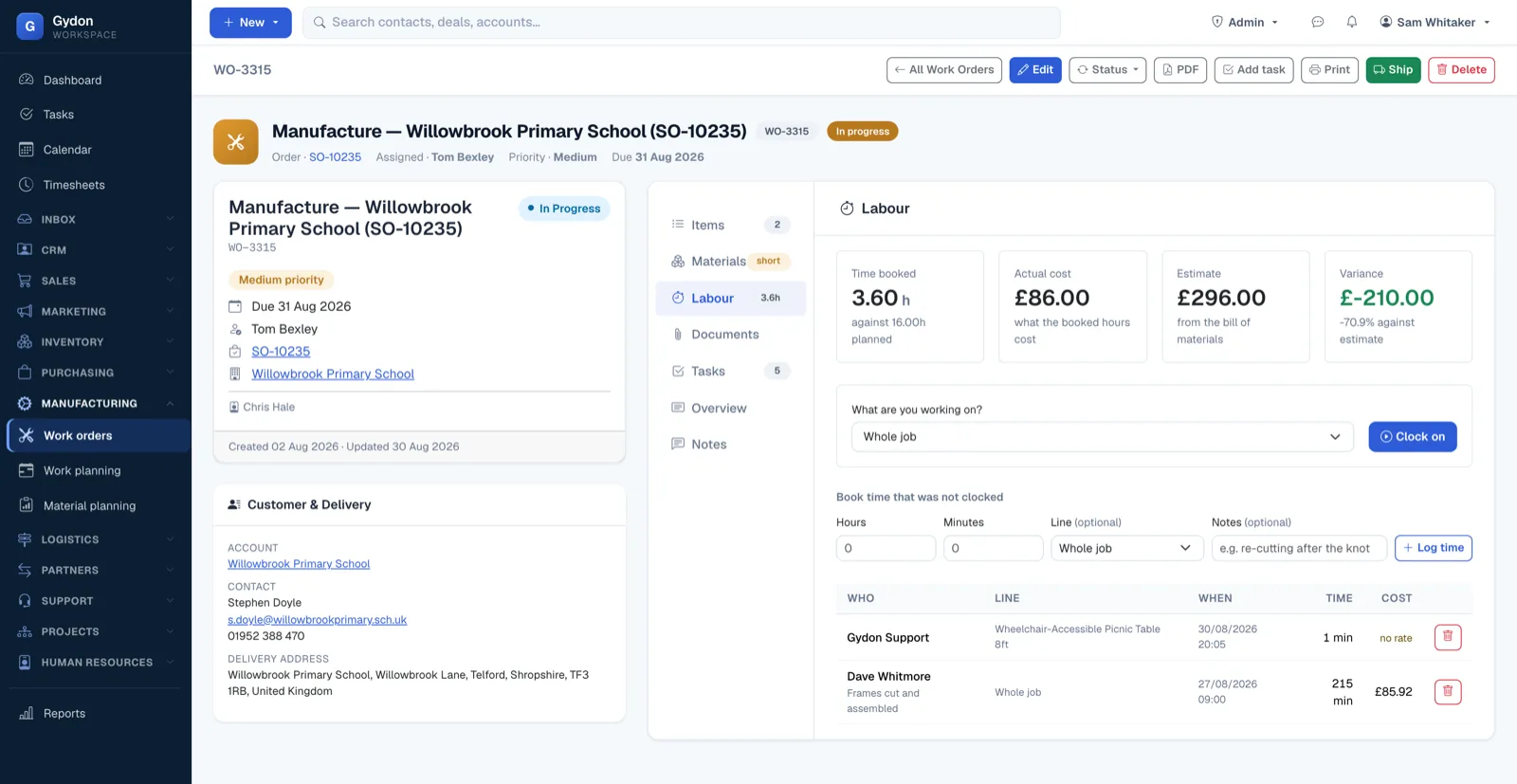
Hours against the job, collected as the work happened.
What you have out at the galvaniser
Almost nothing leaves a fabrication shop without going somewhere else first. Frames go to a powder coater, steelwork goes to a galvaniser, and none of it has been sold. It is still yours, sitting in somebody else's yard.
Gydon records what went out and what has come back, so the answer is on a screen rather than in the foreman's head. If the coater runs Gydon as well, the note, the return and the invoice pass between the two systems and their bill arrives already checked against what you actually got back.
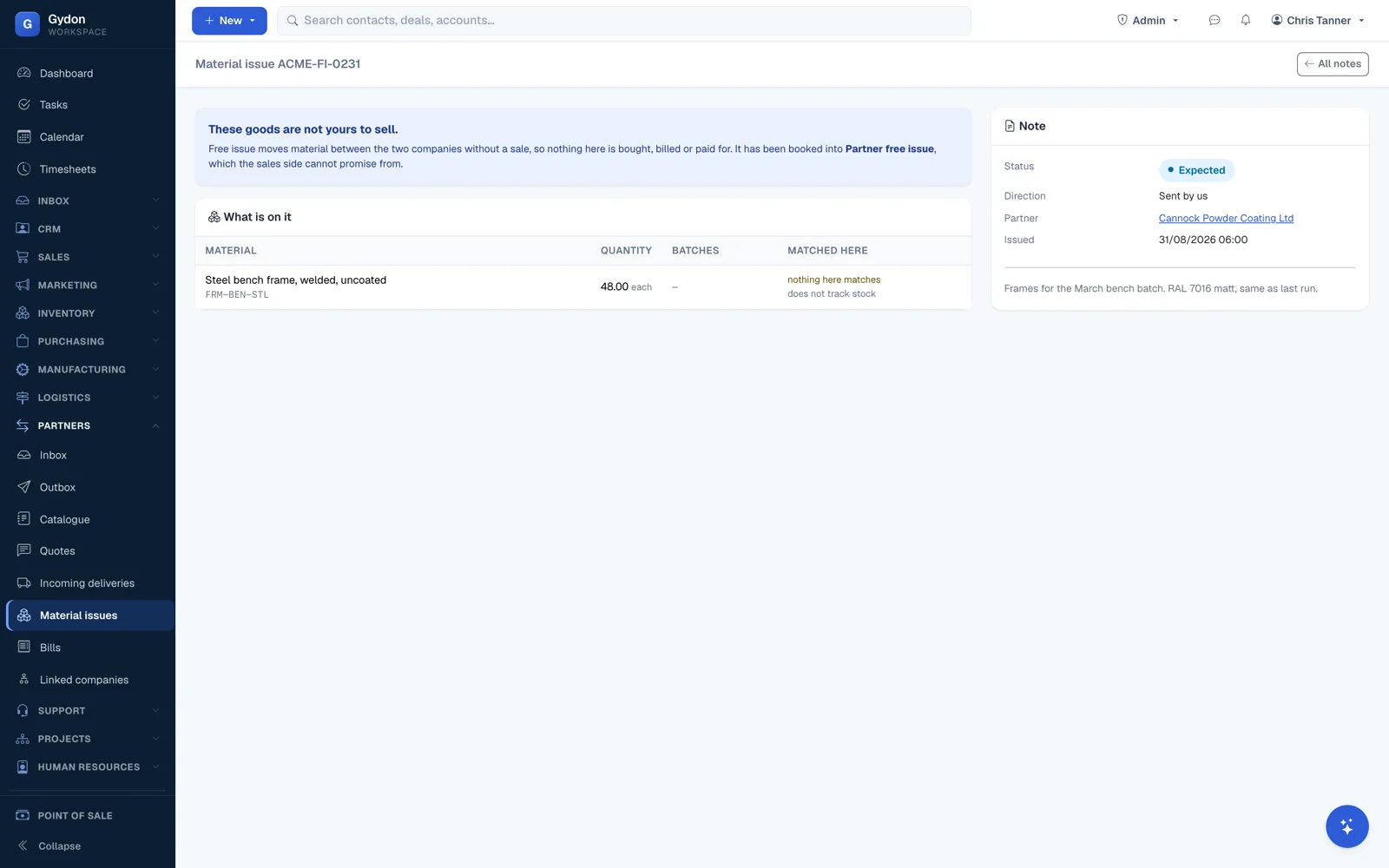
Forty-eight frames out for coating, and not one of them sold.
What fabricators usually switch on
- Manufacturing and Product Costing
- Routing, work centres, work orders and cost of goods, with setup counted once per job.
- Inventory and Purchasing
- Section, plate, sheet and consumables, with batches where material has to be traceable back to a certificate.
- Shopfloor App
- Clocking on and off an operation at the bay, and the drawing for the part in the same place.
- Trading Partners
- Free issue out to coaters and platers, and their invoice checked against what came back.
- Operations and Logistics
- Shipments and rounds where you deliver, or third party carriers where you do not.
- Worth knowing
- Gydon does not nest parts on a sheet or drive a cutting machine. It costs, schedules and records the work; the CAM side stays where it is.
Bring a weldment and its drawing
We will route it across your work centres, cost it with the setup where it belongs, and show you what the shop floor would have recorded against it.