
Stock that knows what the jobs are about to take.
A stock figure is only useful if it accounts for what is already promised and what is about to be consumed. Gydon holds materials, locations, batches and holds, and reads them against the orders and jobs that are already on the board.
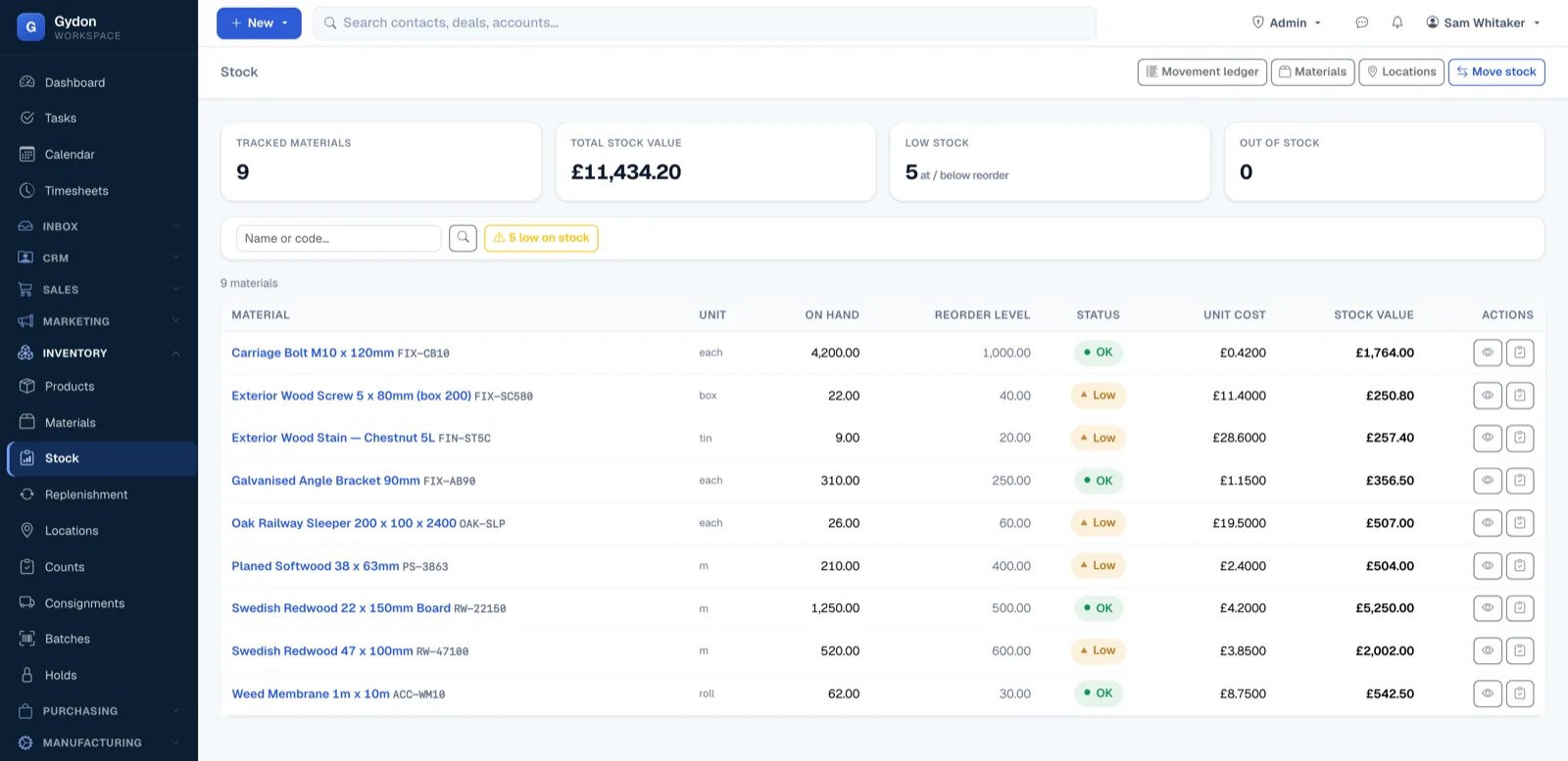
On hand is not the same as available
Holds put stock aside for the order that claimed it, so the number a salesperson sees is what they can genuinely sell rather than what happens to be on a shelf.
Locations, down to the bay
Stock sits somewhere, and Gydon records where. The warehouse app reads and writes the same locations, so a move on the handset is a move in the system.
Batches when you need them
Where a material has to be traceable, batches carry it through goods in, into the job, and out on the delivery.
From shortage to purchase order without retyping it
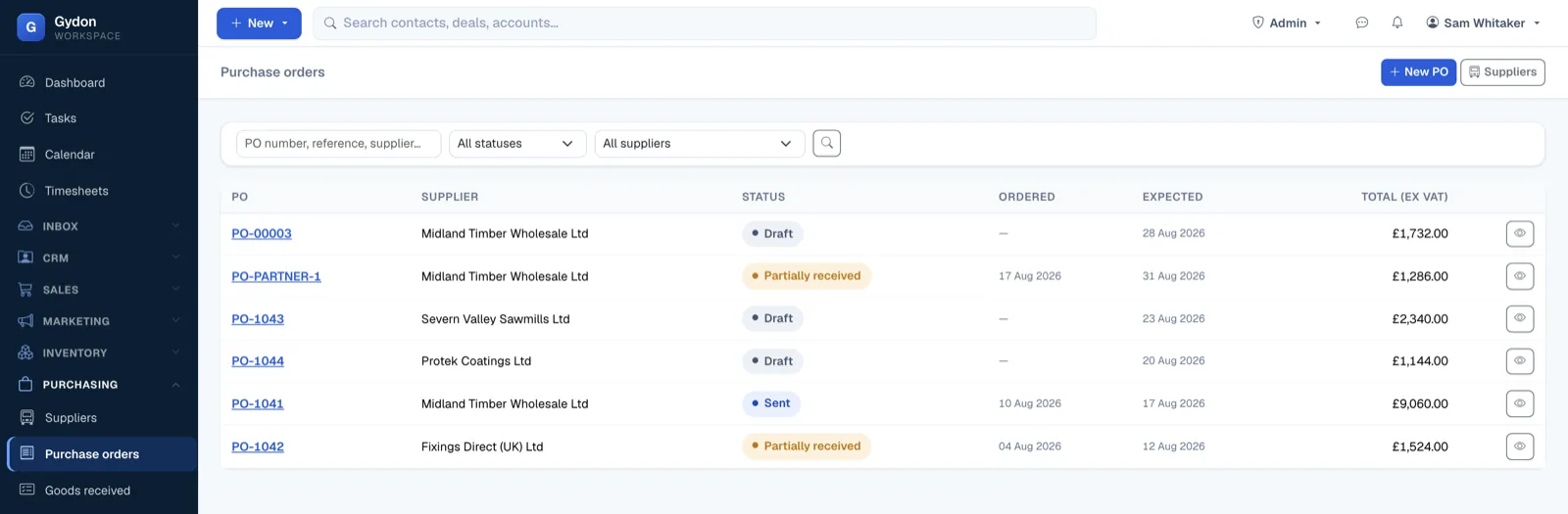
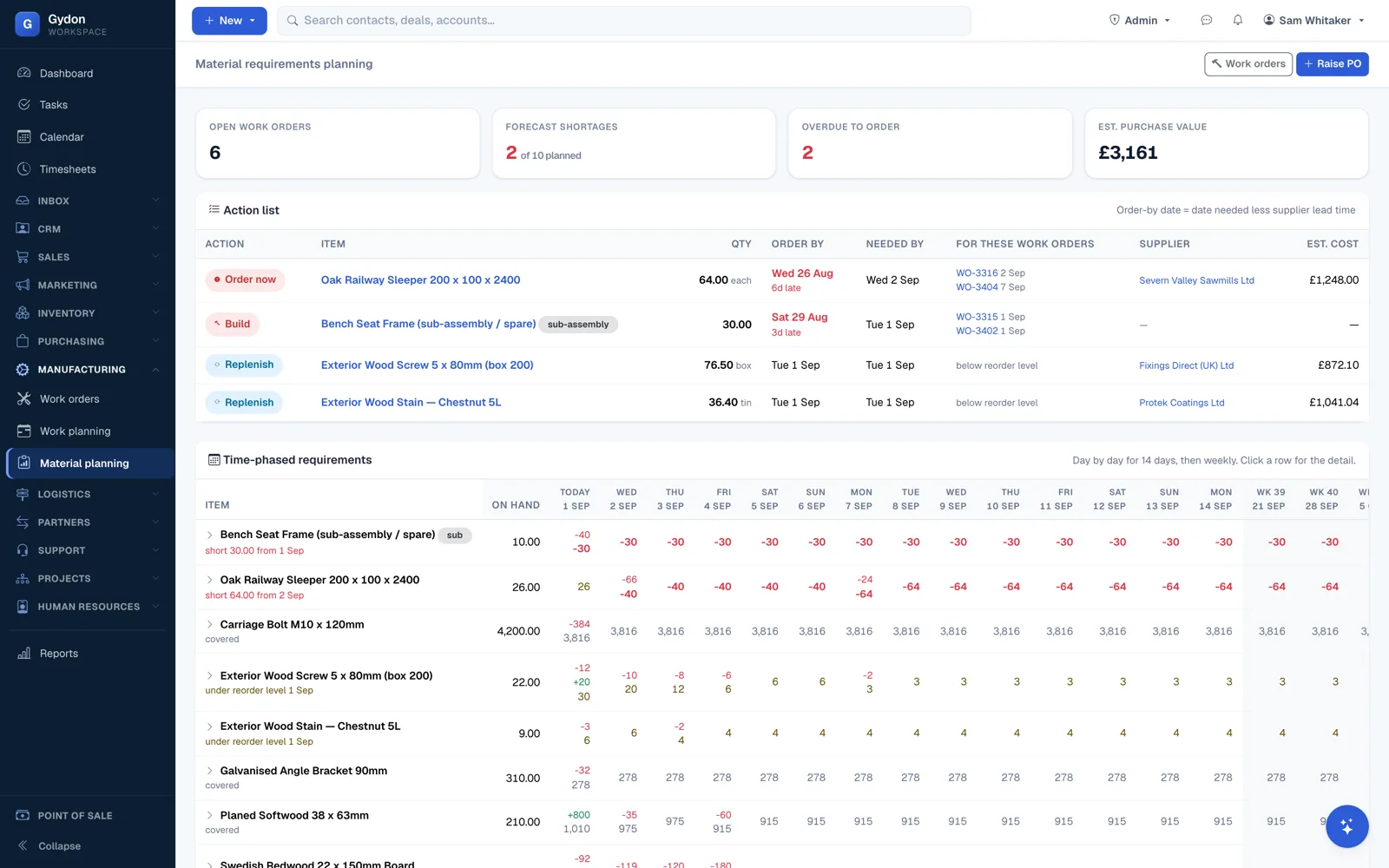
Material planning reads the open jobs, works out what they will need, and sets that against what is in stock and what is already on order. What is missing becomes a purchase order to the supplier who normally provides it. Goods receipt books it in, updates the stock ledger and closes the loop.
- Suppliers with their own products, prices and lead times
- Purchase orders with your own paperwork on them
- Part deliveries handled, so a short delivery does not close the order
- Replenishment levels, so routine reordering stops being somebody's job
Counts that hold still while you count them
A stock count is worthless if the shelf moves underneath it. Gydon freezes what is being counted until the count is finished, then posts the difference as a proper ledger movement with a reason against it, rather than quietly overwriting a number.
The count sheet prints, and the warehouse app counts against the same record, so it does not matter which one your people prefer.
What is in this part of Gydon
- Products and materials
- Sellable products and the materials that go into them, each with their own units, barcodes and suppliers.
- Stock ledger
- Every movement recorded, with the document that caused it, so a quantity can always be explained.
- Locations
- Sites, areas and bays, with stock held per location rather than as one company-wide number.
- Holds
- Stock reserved against the order that claimed it, so it cannot be sold twice.
- Batches
- Traceable lots through goods in, production and dispatch.
- Counts
- Stock takes that lock what they are counting and post a reasoned adjustment.
- Suppliers and purchase orders
- Supplier records, purchase orders on your own paperwork, and goods receipt against them.
- Consignments
- Inbound consignments tracked from the supplier or marketplace to the shelf.
- Replenishment
- Minimum and target levels per item, so routine reordering is suggested rather than remembered.
- Trading Partners
- Where a supplier runs Gydon too, your purchase order lands straight in their system and their invoice comes back already checked against what your yard booked in.
Bring your worst stock problem
The one that keeps being wrong. We will show you where Gydon would have caught it.